Routes of administration and interactions
Choosing a route, enzymatic metabolism, inducers and inhibitors.
Choosing a route
The oral route is simple but slow, subject to the hepatic first pass and to the state of the digestive tract. The intravenous route is immediate and fully bioavailable, but irreversible once injected.
In between, the subcutaneous, intramuscular, transdermal or inhaled routes offer compromises. The inhaled route is of particular interest: it deposits the drug directly on its pulmonary target, limiting systemic exposure.
Inducers and inhibitors
Much of drug metabolism goes through cytochrome P450 enzymes. Some molecules increase their activity — inducers — while others decrease it — inhibitors.
An enzyme inhibitor raises the concentration of the co-administered drug and exposes to overdose; an inducer lowers it and exposes to treatment failure. The timescales differ: inhibition is fast, induction takes several days, the time needed to synthesize new enzymes.

Where interactions arise
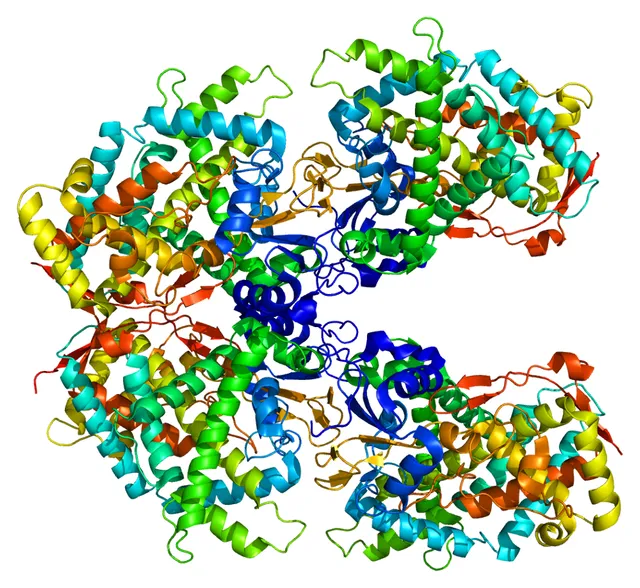
Hepatic metabolism is the main arena. An enzyme inducer increases the production of cytochromes and speeds up the breakdown of the drugs they handle: the effect sets in over one to two weeks and persists for several days after the inducer is stopped. An inhibitor, by contrast, acts from the first doses and pushes concentrations up.
Binding to plasma proteins is a second arena, more often cited than truly decisive. Only the free fraction is active; for a molecule more than ninety-nine percent bound, a tiny displacement can double that fraction. But the freed drug is also eliminated faster, so the effect is usually transient: it matters only for drugs with a narrow therapeutic margin, such as vitamin K antagonists.
Renal elimination, finally. Any drop in filtration rate slows the elimination of mainly renally excreted drugs, which accumulate to toxic concentrations if the dosage is not adjusted.
Each route has its uses
The intravenous route gives complete bioavailability and an immediate effect as a bolus, or a stable concentration by continuous infusion; it is the emergency route, but a dosing error there is immediately complete and irreversible. The intramuscular route forms a depot from which the drug spreads more or less quickly; some long-acting forms last weeks. The subcutaneous route, slower, suits self-injection: insulin, low-molecular-weight heparins.
The inhaled route delivers the drug directly into the bronchi: small doses are enough, with few effects on the rest of the body, hence its value in asthma. The inhaler technique must still be mastered, and it is often poorly taught.
A so-called local route is not always free of general effects. A beta-blocker eye drop, used for glaucoma, passes through the tear ducts into the nasal cavity, where it is absorbed without going through the liver: it can slow the heart or trigger an asthma attack.
Inhibitors and inducers in practice
Cytochrome 3A4 alone metabolises a large share of drugs. Its inhibitors — some macrolide antibiotics such as clarithromycin, azole antifungals, some antiretrovirals, grapefruit juice — raise the concentration of the drugs it breaks down. Combining such an inhibitor with certain statins can thus cause muscle damage, even rhabdomyolysis.
Its inducers — rifampicin, an antituberculosis drug, carbamazepine and other antiepileptics, St John's wort, a plant sold without prescription — instead increase the amount of enzyme and lower the concentration of the drugs combined with them, within one to two weeks. The classic consequence is failure of hormonal contraception, with an unwanted pregnancy.
Vitamin K antagonists combine the risks: narrow margin, cytochrome metabolism, high protein binding. Adding or stopping almost any drug, an antibiotic in particular, requires the clotting test to be checked.
When effects add up
Pharmacodynamic interactions do not change concentrations: they add or oppose effects. Combining an opioid and a benzodiazepine, or either of them with alcohol, adds up their depressant effects on breathing and can be fatal. Combining an anticoagulant with an anti-inflammatory drug or aspirin increases the risk of bleeding.
Combining an angiotensin-converting enzyme inhibitor, a potassium-sparing diuretic and potassium supplements exposes to severe hyperkalaemia, especially if kidney function is impaired. Combining several serotonergic drugs — an antidepressant, tramadol, some migraine drugs — can cause serotonin syndrome: agitation, fever, sweating, tremor, muscle twitching.
Effects can also oppose each other. A non-selective beta-blocker can cancel the effect of beta-2 bronchodilators in an asthmatic and trigger bronchospasm; anti-inflammatory drugs reduce the effect of antihypertensives.
Pregnancy, breastfeeding and old age
During pregnancy, every drug must be assessed for its risk to the embryo and fetus. Some are contraindicated throughout pregnancy, others at certain stages: non-steroidal anti-inflammatory drugs, for example, are contraindicated from the sixth month, because they can prematurely close the fetal ductus arteriosus and damage the fetal kidneys. Specialised centres advise health professionals on the risk of each drug.
During breastfeeding, most drugs pass into milk in small amounts; many are compatible with breastfeeding, others are not. The decision is made case by case rather than by systematically stopping breastfeeding.
In older people, some drugs are particularly risky. Those with anticholinergic effects — some antihistamines, antidepressants, drugs for incontinence — promote confusion, constipation and urinary retention. Benzodiazepines and sleeping pills promote falls and fractures. Regularly reviewing the prescription, and stopping what is no longer useful, is part of treatment.
Avoiding errors
Adverse drug effects are a common cause of hospital admission, especially in older people on many medicines, and some are avoidable. On admission and discharge, medication reconciliation compares the full list of drugs the patient actually takes, self-medication included, with what is prescribed: it spots omissions, duplicates and interactions.
Self-medication has its traps. Paracetamol is present in many over-the-counter products for pain, fever or colds: combining several risks unintentional overdose. Over-the-counter anti-inflammatory drugs are dangerous in people with kidney failure or heart failure, and in pregnant women from the sixth month.
Finally, a treatment works only if it is taken. Adherence, the match between actual intake and the prescription, is often imperfect in chronic diseases without symptoms, such as hypertension. Simplifying the dosing schedule and explaining the purpose of treatment improve it.
58 answered questions go with this chapter in the practice section.
Sources and further reading
Reference textbooks
- Humphrey P. Rang et coll., Rang & Dale. Pharmacologie, Elsevier Masson.
Open access
- Les sources de variabilité de la réponse au médicament — Collège national de pharmacologie médicale.
- Pharmacocinétique — Collège national de pharmacologie médicale.
Last revised : . Text licensed under CC BY-SA 4.0.